Dale Carnegie Public Speaking Course vs. Phobia Treatment
You took the course. You still freeze. Here is why those are two different problems, and only one of them is a skill gap.
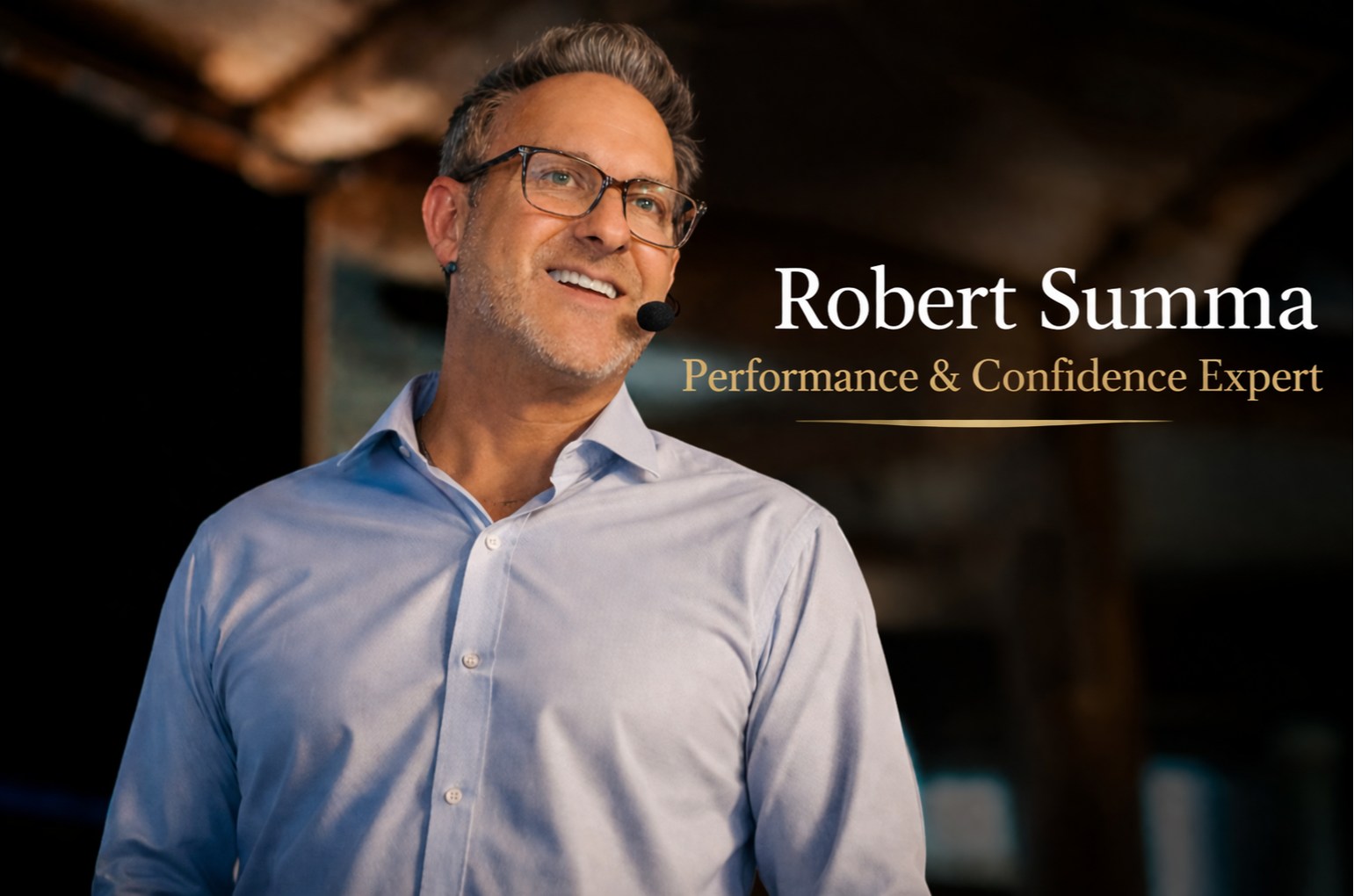
Dale Carnegie courses improve delivery skills for people with ordinary public speaking nerves. They are not designed to treat a clinical phobia, and they do not. If you have tried a skills-based program and the fear persisted, you likely have a specific phobia requiring clinical treatment. Robert Summa, the only certified public speaking phobia specialist in the United States, has eliminated it in 750-plus executives with a 99.6 percent success rate.
You took the Dale Carnegie course. You did the exercises, gave the practice talks, sat through the roleplays, and walked out with a certificate and a little more polish. Then you stood up in front of your board or your leadership team, and your hands still shook. Your mind still went blank halfway through the second slide. If that is where you are right now, you are not bad at the course. You handed the right tool the wrong job.
What Dale Carnegie Actually Trains
Dale Carnegie's course is built to make you a better communicator. It teaches structure, delivery, presence, and confidence for people whose nervousness is ordinary. For someone who gets a normal case of butterflies before a talk, that kind of training genuinely helps. It sharpens skill, and skill is real.
But skill training assumes the problem sits in what you know how to do. For a lot of executives, that is not where the problem lives at all.
Fear Is Not the Same Thing as a Phobia
Fear is a normal emotional response. It shows up before something important, and it usually fades with preparation and repetition. A phobia is different. It is a fixed, automatic alarm reaction that fires regardless of how prepared you are, how many times you have given the talk before, or how much you know your material cold. You can have delivered two hundred presentations in your career and still have your body react to the two hundred and first one as if it were a threat to your life.
That distinction is not semantic. It determines what kind of help actually works.
Why Skill Training Doesn't Reach the Amygdala
Here is the part almost every public speaking program misses. Preparation, rehearsal, and coaching work on your prefrontal cortex, the part of your brain that organizes thoughts, structures an argument, and chooses your words. That is exactly what a course like Dale Carnegie is designed to strengthen, and it does that well.
A true phobia lives somewhere else. It lives in the amygdala, the part of your brain responsible for detecting threat and firing a survival alarm. When the amygdala decides a boardroom is dangerous, it shuts down the prefrontal cortex to redirect resources toward fight or flight. That is why smart, over-prepared, deeply competent people still go blank mid sentence. The part of the brain doing the panicking is not the part that studied the material.
No amount of rehearsal reaches the amygdala, because rehearsal is a prefrontal cortex activity. You cannot outline your way out of a threat response.
Who the Course Is Right For, and Who It Isn't
If your nerves ease once you know your material and get a few reps in, a skills-based course like Dale Carnegie is a solid investment. It will make you sharper, more organized, and more persuasive.
If you freeze no matter how prepared you are, if your voice shakes reading from your own notes, if you have quietly avoided visibility opportunities for years despite being the most capable person in the room, that is not a skill gap. That is a phobia, and it needs a different kind of treatment entirely.
I am the only certified public speaking phobia and anxiety expert currently practicing in the United States. My work is CBT-based and built specifically to target the amygdala's alarm response, not to add more polish on top of a nervous system that is still sounding the alarm. I have worked with more than 750 clients, roughly 85 percent of them VPs through C-Suite and board members, along with athletes, coaches, politicians, authors, and entrepreneurs who carry the same phobia under a different job title. The success rate across that group sits at 99.6 percent, and the work is typically done in 3 to 4 weeks, not months of ongoing coursework. Treatment is also HSA and FSA eligible under IRS Code 502, since this is clinical treatment for a diagnosable phobia, not a professional development expense.
There is currently a four-week average waitlist to begin, which tells you something about how many executives are quietly dealing with exactly this.
If You've Already Done the Courses
If you have already invested in the training and the polish and you are still freezing, that is not a sign you need to try harder or take another course. It is a sign the actual problem was never a skill problem. I would be glad to talk.
Already done the courses and still freezing?
That is not a skill problem, and it will not resolve with more polish.
GET YOUR FEAR SCORE NOWFrequently Asked Questions
Q: What is the difference between Dale Carnegie training and public speaking phobia treatment?
Dale Carnegie training builds communication skill, structure, and confidence for people whose nervousness is ordinary. Phobia treatment is clinical, CBT-based work that targets the amygdala's automatic threat response, which does not respond to skill building because it fires before conscious thought engages.
Q: Can a public speaking course cure a phobia?
No. Courses train the prefrontal cortex, the part of the brain responsible for organizing thoughts and delivery. A true phobia lives in the amygdala, which shuts the prefrontal cortex down under perceived threat. Rehearsal and polish cannot reach that part of the brain.
Q: How do I know if I need phobia treatment instead of a communication skills course?
If your nerves ease with preparation and repetition, a skills course will likely help. If you freeze regardless of how prepared or experienced you are, and this has been true for years, that points to a phobia rather than a skill gap.
Q: Is public speaking phobia treatment covered by HSA or FSA?
Yes. Because it is clinical treatment for a diagnosable phobia rather than professional development, it is eligible under IRS Code 502 for HSA and FSA reimbursement.
Q: How long does public speaking phobia treatment take compared to a multi-week course?
Phobia treatment is typically completed in 3 to 4 weeks of focused clinical work, versus ongoing coursework that builds skill over time but does not address the underlying amygdala response.
The Skill Gap Was Never the Problem
More than 750 clients have gone through this work, with a 99.6 percent success rate. Most are done in 3 to 4 weeks.
GET YOUR FEAR SCORE NOWRobert Summa Is the Only Certified Public Speaking Phobia Expert Currently Practicing in the US
If courses and coaching haven't fixed the freeze, take the quiz on the site and find out what is actually going on.
GET YOUR FEAR SCORE NOW