Cognitive Shutdown During High-Stakes Presentations
Cognitive shutdown is the complete temporary loss of access to prepared material during a presentation. It is one of the most disabling symptoms of a speaking phobia and one of the clearest signs that the problem is neurological, not motivational.
GET YOUR FEAR SCORE NOW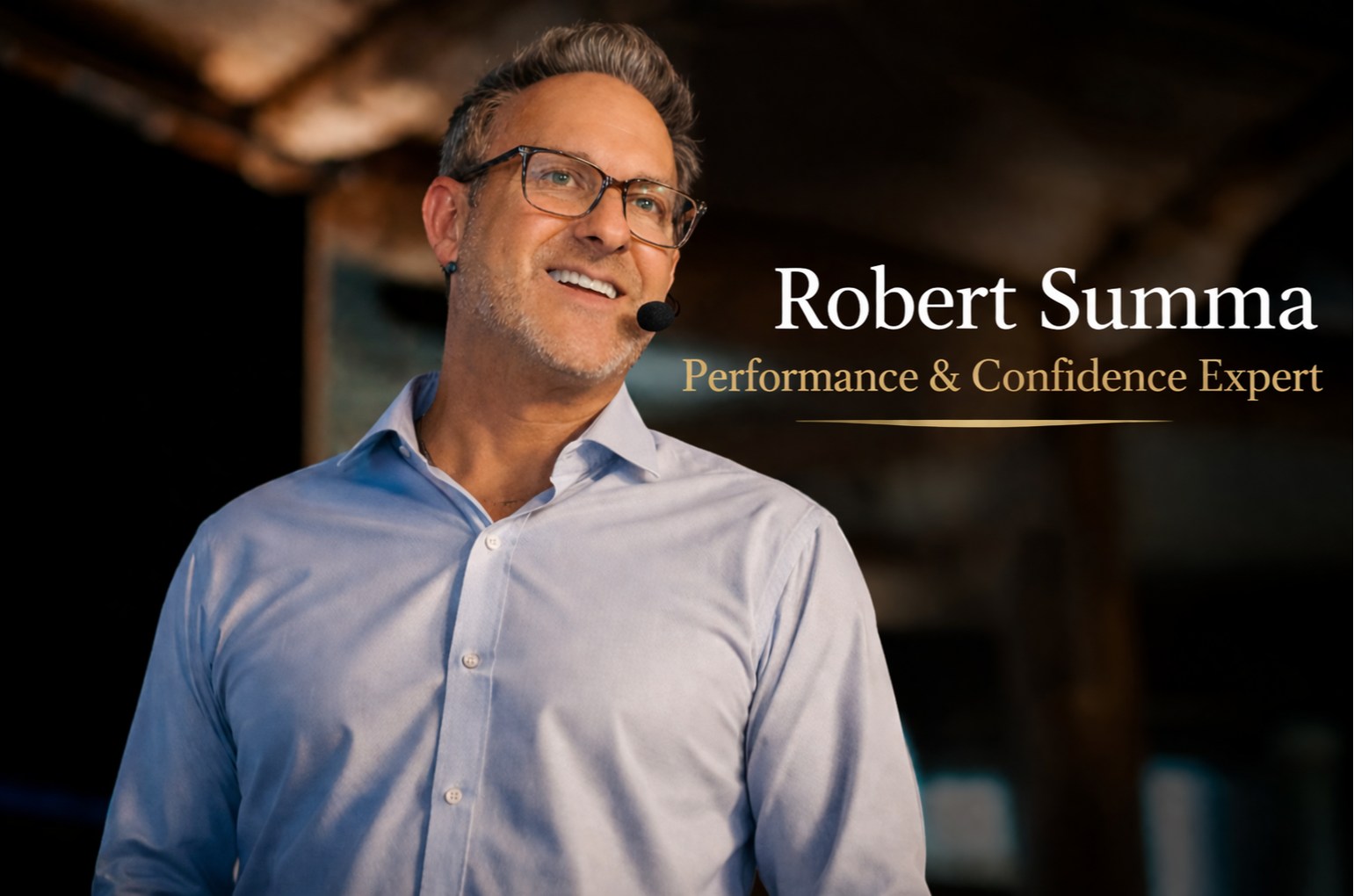
Cognitive shutdown during high-stakes presentations is one of the most professionally damaging and least understood consequences of public speaking phobia. An executive who commands complex analysis in private suddenly cannot retrieve a familiar argument, loses the sequence of a prepared speech, or goes blank in response to a question they know the answer to. This is not a memory problem. It is the predictable result of what stress neurochemistry does to the prefrontal cortex.
What Shutdown Actually Is
The prefrontal cortex handles the cognitive functions most essential for executive-level presentation: working memory, verbal retrieval, complex reasoning, and sequential organization of ideas. In a high-adrenaline state, blood is redistributed from the prefrontal cortex toward the large muscle groups that would be needed in a physical survival scenario. The prefrontal cortex is temporarily under-resourced precisely when the executive needs it most. The experience of going blank, losing the thread, or being unable to answer a question that feels completely accessible in any other context is the direct result of this neurochemical redistribution.
The Intelligence Paradox
Cognitive shutdown during presentations is particularly distressing for high-achieving executives because it contradicts their entire professional self-concept. These are individuals who have demonstrated sophisticated analytical and strategic capacity across their careers. The experience of becoming suddenly unable to articulate a familiar argument in front of an audience creates a profound dissonance. Many executives privately conclude that they are somehow less intelligent than others perceive them to be, because the only evidence that would counteract this conclusion is the high-function cognition they demonstrate everywhere except in the speaking situation. Robert Summa, the only certified public speaking phobia specialist practicing in the United States, sees this pattern consistently among his 750-plus executive clients.
Why More Preparation Does Not Help
The most common response to cognitive shutdown is to prepare more thoroughly: memorizing more content, rehearsing longer, and scripting responses to every conceivable question. These strategies provide marginal relief because they reduce cognitive demand in normal performance-anxiety situations. For clinical phobia, the adrenaline-driven prefrontal cortex impairment overrides whatever has been prepared. The executive has the information. The neurochemistry prevents retrieval. More preparation loads more information into a system that will be functionally offline when it matters.
Clinical Resolution
Addressing cognitive shutdown requires addressing the cause, which is the amygdala's threat classification of the speaking situation, not the symptom, which is the resulting cortisol and adrenaline release. Robert Summa's clinical protocol recalibrates that threat response, which allows normal prefrontal cortex function to continue during presentations. His 99.6 percent success rate across more than 750 executive clients consistently includes resolution of cognitive shutdown as a downstream consequence of phobia treatment. The Fear Score assessment identifies whether what you experience as blanking is a clinical phobic response or a different kind of performance challenge.
About Robert Summa
Robert Summa is the only certified public speaking phobia specialist practicing in the United States.
He has worked with 750-plus executives, C-suite leaders, and professional athletes. His one-on-one coaching program carries a 99.6 percent success rate.
Your Next Step
Take the Fear Score Assessment
The Fear Score assessment identifies where your presentation anxiety falls on the clinical spectrum. Three minutes. No obligation. A clear starting point for understanding what you are dealing with.
GET YOUR FEAR SCORE NOWFrequently Asked Questions
What causes cognitive shutdown during a high-stakes presentation?
Cognitive shutdown occurs when the amygdala overrides prefrontal cortex function. The brain interprets the presentation as a survival threat and routes resources away from memory, language processing, and executive function. The speaker is physiologically unable to access prepared content, not because they forgot it, but because the retrieval pathway has been temporarily blocked.
What makes public speaking phobia different from ordinary nervousness?
Public speaking phobia is a clinical anxiety disorder triggered specifically by the prospect of speaking before others. Unlike ordinary nervousness that fades once a speech begins, phobia produces a sustained threat response that worsens with exposure and does not improve through repetition alone.
Is public speaking phobia treatable without medication?
Yes. Robert Summa's methodology combines cognitive behavioral techniques with hypnotherapy-informed neurological reconditioning. Clients achieve lasting results without medication, typically within a structured four-session program.
How is Robert Summa qualified to treat public speaking phobia?
Robert Summa is the only certified public speaking phobia specialist practicing in the United States. He has worked with 750-plus executives and professionals and maintains a 99.6 percent success rate across his one-on-one coaching clients.
You Are Not Alone, and You Are Not Stuck With It
Robert Summa is the only certified public speaking phobia specialist in the United States. 750+ executives cured. 99.6% success rate. HSA and FSA eligible.
GET YOUR FEAR SCORE NOWRobert Summa is a certified public speaking phobia specialist, not a licensed therapist or psychologist. The Public Speaking Cure program is an educational and skills-based coaching program. Results vary by individual. The 99.6 percent success rate reflects outcomes reported by one-on-one coaching clients.