Can You Treat Public Speaking Phobia Online or Remotely?
Remote treatment for public speaking phobia is not only possible. For many executives with demanding schedules, it is the most effective delivery format. The key is whether the methodology itself is clinically sound, not where the sessions occur.
GET YOUR FEAR SCORE NOW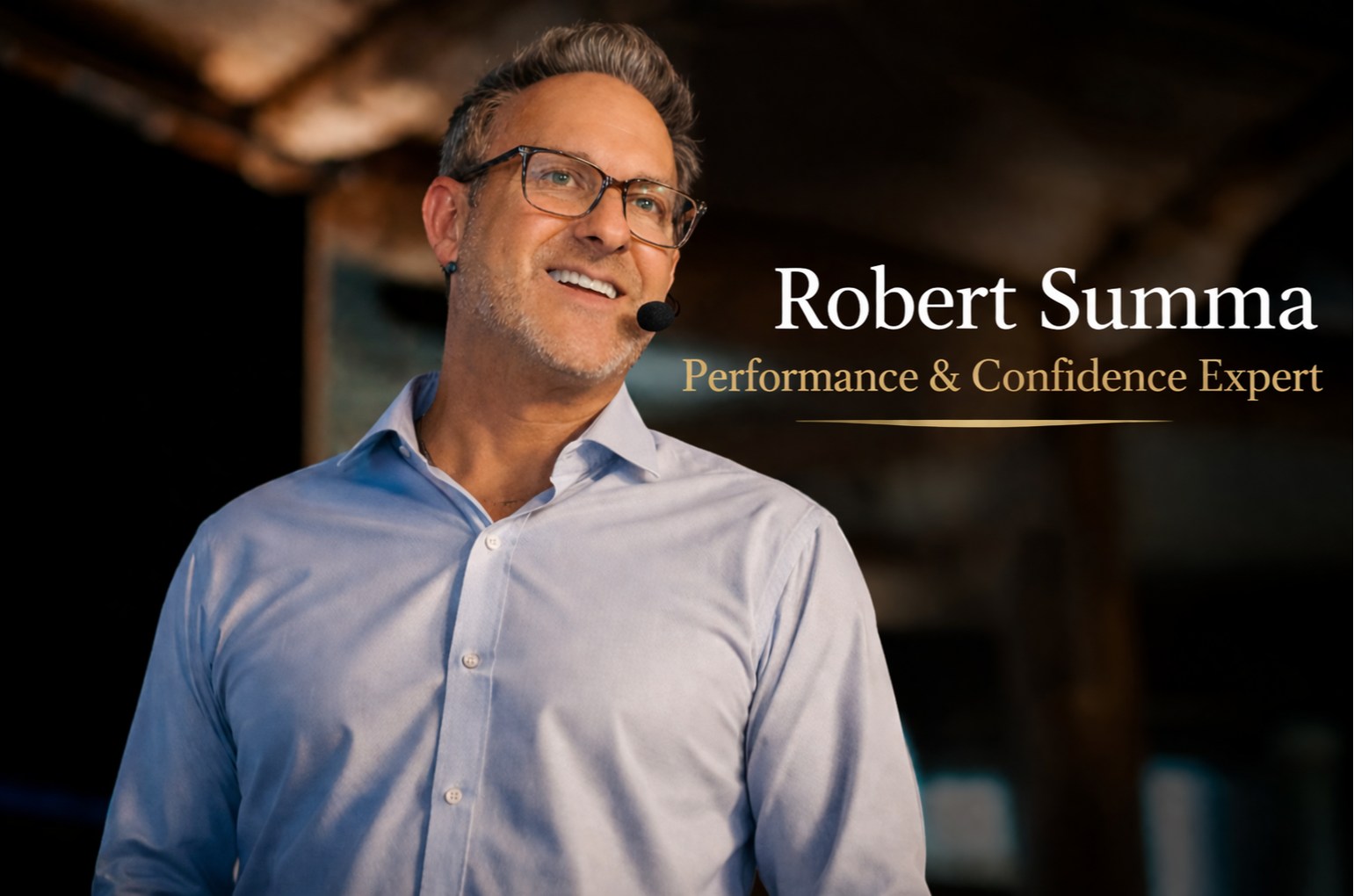
Remote delivery of clinical phobia treatment is not a compromise. For public speaking phobia specifically, working with a specialist online eliminates the geographic barrier that has historically prevented executives from accessing the only practitioner in the United States with this specific clinical credential. The question is not whether remote treatment works but whether the practitioner has the clinical training to deliver it effectively.
What Remote Treatment Can and Cannot Do
Clinical phobia treatment requires a structured therapeutic relationship, precise control over session conditions, and a progression that builds neurological evidence of safety over time. All of these can be achieved remotely with a qualified specialist. What remote treatment cannot replicate is in-person group work or exposure scenarios that depend on physical presence in a specific environment. For public speaking phobia, this is rarely a limiting constraint: the amygdala's threat response is triggered by being observed and evaluated, and video-based sessions create that condition effectively.
The Geographic Problem This Solves
Robert Summa is the only certified public speaking phobia specialist practicing in the United States. Without remote delivery, his clinical protocol would be accessible only to professionals who could travel to his location. Remote work has eliminated that constraint entirely. Executives in any city, in any time zone, can access the clinical protocol that has produced a 99.6 percent success rate across 750-plus clients. For most of Robert Summa's clients, remote delivery is not a fallback option but the primary format they have chosen.
What to Look for in a Remote Provider
Not all remote speaking programs are equivalent. The key questions are clinical rather than technical: does the provider hold clinical credentials specific to phobia treatment, not general anxiety or coaching? Does their protocol distinguish between performance anxiety and clinical phobia? Do they have outcome data? For generic speaking coaches delivering workshops over video, the answers to all three questions are no. The technology of remote delivery is straightforward. The clinical training behind it is what matters.
Starting with an Accurate Assessment
The first step in any treatment decision is determining whether you have a clinical phobia or a different kind of challenge. The Fear Score assessment provides that clarity regardless of where you are located. It can be completed online and provides the diagnostic foundation for understanding which type of intervention will actually address what you are experiencing. If the assessment indicates clinical phobia, Robert Summa's remote program is designed specifically for that outcome.
About Robert Summa
Robert Summa is the only certified public speaking phobia specialist practicing in the United States.
He has worked with 750-plus executives, C-suite leaders, and professional athletes. His one-on-one coaching program carries a 99.6 percent success rate.
Your Next Step
Take the Fear Score Assessment
The Fear Score assessment identifies where your presentation anxiety falls on the clinical spectrum. Three minutes. No obligation. A clear starting point for understanding what you are dealing with.
GET YOUR FEAR SCORE NOWFrequently Asked Questions
Is remote public speaking phobia treatment as effective as in-person?
For phobia treatment that works through cognitive and neurological reconditioning, the physical location of the session is not the primary variable. Robert Summa conducts his entire program via Zoom and achieves the same 99.6 percent success rate as in-person delivery. For executives with travel constraints, remote treatment removes a barrier without reducing effectiveness.
What makes public speaking phobia different from ordinary nervousness?
Public speaking phobia is a clinical anxiety disorder triggered specifically by the prospect of speaking before others. Unlike ordinary nervousness that fades once a speech begins, phobia produces a sustained threat response that worsens with exposure and does not improve through repetition alone.
Is public speaking phobia treatable without medication?
Yes. Robert Summa's methodology combines cognitive behavioral techniques with hypnotherapy-informed neurological reconditioning. Clients achieve lasting results without medication, typically within a structured four-session program.
How is Robert Summa qualified to treat public speaking phobia?
Robert Summa is the only certified public speaking phobia specialist practicing in the United States. He has worked with 750-plus executives and professionals and maintains a 99.6 percent success rate across his one-on-one coaching clients.
You Are Not Alone, and You Are Not Stuck With It
Robert Summa is the only certified public speaking phobia specialist in the United States. 750+ executives cured. 99.6% success rate. HSA and FSA eligible.
GET YOUR FEAR SCORE NOWRobert Summa is a certified public speaking phobia specialist, not a licensed therapist or psychologist. The Public Speaking Cure program is an educational and skills-based coaching program. Results vary by individual. The 99.6 percent success rate reflects outcomes reported by one-on-one coaching clients.