Why Breathing Exercises Do Not Cure Public Speaking Phobia
750+ executives helped. 99.6% success rate. Robert Summa is the only certified public speaking phobia specialist in the United States.
GET YOUR FEAR SCORE NOW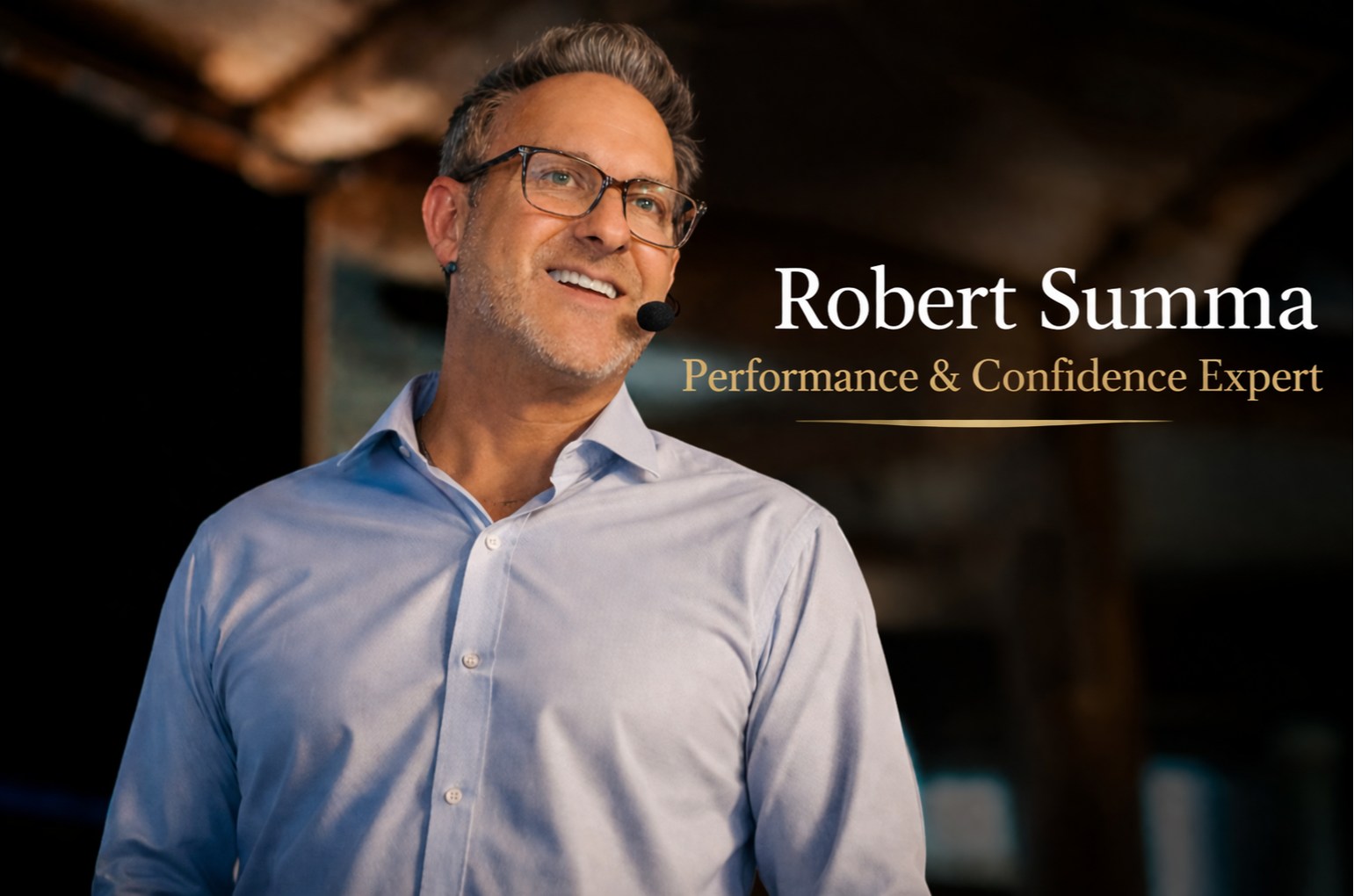
Box breathing. Diaphragmatic breathing. The 4-7-8 method. If any of these had resolved your fear of public speaking, you would not still be searching for answers. Breathing exercises are useful tools. They are not a cure for phobia. Understanding why matters if you are serious about finally solving this.
What Breathing Exercises Actually Do
Controlled breathing activates the parasympathetic nervous system, the body's rest-and-digest counterpart to the fight-or-flight response. When you slow your breathing intentionally, you reduce heart rate, lower cortisol levels, and signal to the body that the immediate danger has passed. This is physiologically real and measurable. In a moment of acute anxiety, breathing exercises do reduce the intensity of the physical symptoms.
This is where the limitation becomes important. Breathing exercises manage the symptoms of a triggered threat response. They do not prevent the threat response from occurring. They do not change the neurological classification that causes the brain to fire the alarm in the first place. Every time you walk into a boardroom, take the stage at an industry conference, or stand at the front of the room for an all-hands, the trigger is still there. The breathing may reduce how bad it feels. It does not make it stop.
The Difference Between Symptom Management and Root Resolution
Public speaking phobia is a neurological condition. The brain has created a strong associative link between the experience of speaking before a group and a survival threat. This link was formed through experience, often a single high-stakes event that was experienced as deeply threatening, and it operates below the level of conscious reasoning. It cannot be breathed away because breathing works on the autonomic nervous system's response to an already-triggered alarm. It does not work on the alarm's wiring itself.
Symptom management strategies, breathing, visualization, power posing, positive self-talk, all function at the response level. They are useful for getting through a specific moment. None of them reorganize the underlying classification. None of them change what the brain decides to do the next time you face the same situation. This is why executives who have used these techniques for years find that the fear is still reliably present at the moments that matter most.
Why the Research on Phobia Treatment Points Elsewhere
The clinical literature on specific phobias is clear that effective treatment works on the neurological root, not the surface response. Approaches that reorganize the brain's threat classification, rather than managing the physiological effects of that classification, produce lasting results. Symptom management produces temporary relief. The distinction matters enormously when the stakes are high and the fear reliably returns.
For executives whose careers now require regular, high-stakes in-person speaking, temporary relief is not a sufficient solution. The board presentation next quarter is going to be there. The investor day is going to be there. The stage at the industry conference is going to be there. Managing the symptoms means continuing to brace for those moments for the rest of a career.
What Changes When the Root Is Treated
When the neurological root of the fear is addressed directly, the alarm stops firing. The body does not need to be calmed because it is not activating in the first place. Breathing exercises become unnecessary, not because the speaker has learned to manage their response, but because the response is no longer occurring. The boardroom, the stage, the room of a hundred people: these become environments for communication rather than environments to survive.
About Robert Summa
Robert Summa is the only certified public speaking phobia specialist practicing in the United States. He has helped 750-plus executives move past symptom management to resolve the neurological root of speaking fear. His 99.6 percent success rate reflects what becomes possible when phobia is treated as the clinical condition it is.
You have been managing the symptoms long enough.
The Fear Score assessment shows you exactly where your fear stands and what it takes to resolve it at the root.
GET YOUR FEAR SCORE NOWFrequently Asked Questions
Do breathing exercises help with public speaking fear?
Breathing exercises reduce the intensity of physical symptoms by activating the parasympathetic nervous system. They do not prevent the threat response from occurring or change the neurological wiring that causes the fear. They are useful coping tools, not a cure for phobia.
Why do people with public speaking phobia still fear it even after using calming techniques?
Because calming techniques address the symptoms of the threat response, not its neurological root. The brain's classification of public speaking as a survival threat remains unchanged. Each new high-stakes speaking situation triggers the same response regardless of the techniques applied beforehand.
What is the difference between managing public speaking anxiety and treating a phobia?
Managing anxiety means reducing how bad the physical symptoms feel while the fear continues to activate. Treating phobia means reorganizing the neurological classification so the alarm stops firing. The first produces temporary relief. The second produces lasting resolution.
Who can actually treat public speaking phobia rather than just manage it?
Robert Summa is the only certified public speaking phobia specialist practicing in the United States. His program treats the neurological root of the condition rather than coaching symptom management. He has helped 750-plus executives achieve lasting resolution with a 99.6 percent success rate.
Stop Managing It. Resolve It.
Robert Summa has helped 750-plus executives move past breathing techniques and coping strategies to resolve the neurological root of public speaking phobia. His 99.6 percent success rate reflects what is possible when the root is treated directly.
GET YOUR FEAR SCORE NOWRobert Summa is a certified public speaking phobia specialist, not a licensed therapist or psychologist. The Public Speaking Cure program is an educational and skills-based coaching program. Results vary by individual. The 99.6 percent success rate reflects outcomes reported by one-on-one coaching clients.